

There are many fine art schools available all around the world. Some are contemporary, some are classical. There’s a form of art education to fit almost every need.
You might be wondering about my art education. Did I have any formal training or am I self-taught? The answer is yes.
My Art Education
My training as an artist is a mix of self-training and formal education, with the emphasis on self-training.
Formal Training
I had two years of high school art, one semester of painting at a community college, and one semester in the Fine Art Department at Abilene Christian University, Abilene, Texas.
High School
The high school art department had two teachers. The nicest of them was a lady, but her classes seemed geared more toward craft-style projects than fine art. It wasn’t a bad class, it just wasn’t what I was looking for. I remember very little about drawing projects in that class. In fact, the most memorable experience was a bout of heat stroke! You don’t need art class for that, but that’s where it happened.
The second teacher was a grumpy old guy who created funny ceramic figures. I can’t say he wanted everyone to turn out the kind of work he turned out, but I don’t recall that he had much sympathy for a student who loved horses and wanted to paint horse portraits for a living.
The high school projects I remember doing are a pen-and-ink drawing of a gothic-style house, a 3-D house floor plan made out of thick poster board, making and flying a kite, and taking a spin on a potter’s wheel.
The floor plan was fun. I disliked the pen-and-ink drawing even though a neighbor was thrilled with it and gladly took it off my hands. It hung in her house until she died decades later. I think my brother now has it.
We won’t talk about the potter’s wheel (though I sometimes think it would be fun to try again).
Needless to say, I took two years of high school and went no further.
College & University
The oil painting class in the local community college was intended to help me be more disciplined in painting. I thought that if I had to paint for a class, I’d be more likely to paint regularly. The routine did help with discipline, but that kind of discipline has to come from inside to work properly.
The painting I remember most clearly was a large painting of a white tail buck trotting through snow. It was a large painting on canvas panel and it’s one of those paintings that I wish I had a picture of. I don’t know what happened to it. Maybe it’s still in the house where I grew up and which my brother now owns.

I started a more formal art education 4-1/2 years after graduating high school. At that time, I registered in the Fine Art Department at Abilene Christian University. The only other instruction I’d taken to that point was the correspondence course from the Art Instruction Schools in Minneapolis. Those credits were not transferable, so I had to start on the ground floor. Basic drawing from life, and basic graphic design were the two art classes for that semester.
The problem with all of this formal training was that none of it seemed to advance my personal goals. Instruction involved no horses. During my stay at university, the emphasis was non-representational art. I sometimes regret not finishing the degree, but not very often. What I should probably have done was switch to a business major and take some art courses on the side. That would have suited me much better for the years to come.
That covers the formal training. What did I do on my own?
Self Training
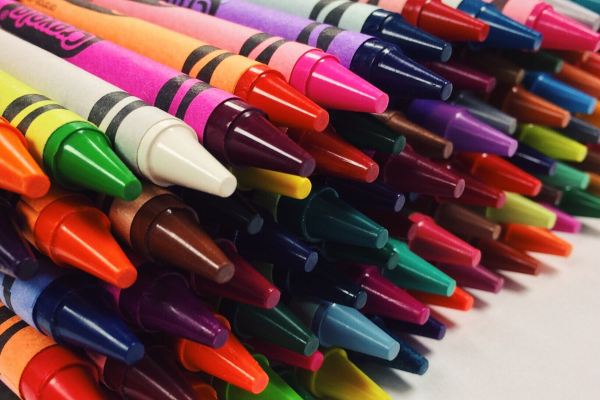
Some of that you know if you read the post I wrote about getting started in art. In short, I started learning art as a child using crayon. I graduated to paint-by-number sets in my teens. Mom helped me, too, with basic lessons in mixing color by layering crayons, and blending oils.
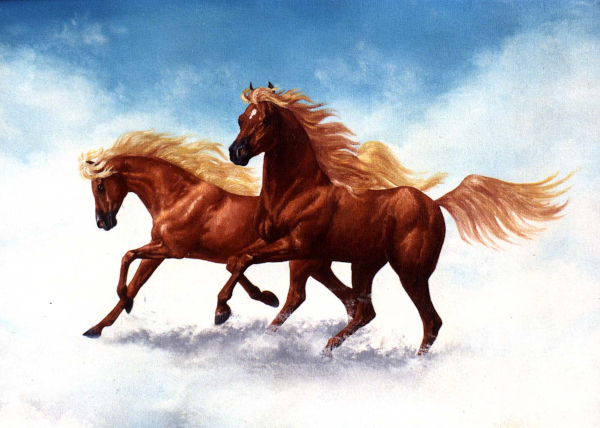
As I got older, I spent a lot of time looking through the horse magazines I received, studying photographs of horses, and painting a few of them.
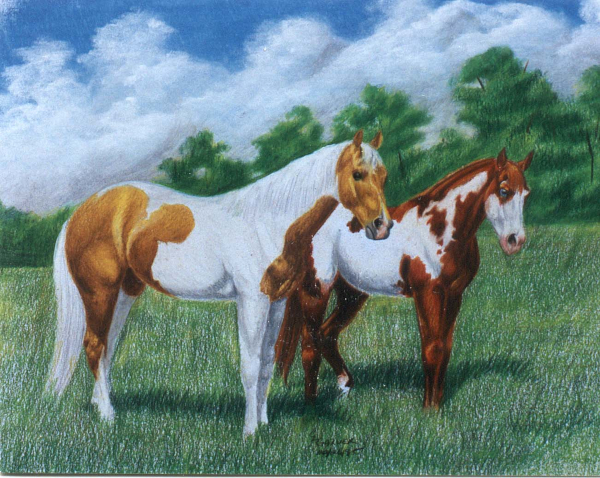
I also photographed the horses around me after getting a camera. Sometimes those photos were good enough to paint from. They at least were good enough for my skill level at the time.
Once I discovered art programs on the local public broadcasting station, I started watching them. The artist of the day back then was Bill Alexander. Alexander taught Bob Ross, so their techniques were similar.
I was intrigued by the way Alexander made a complete painting in half an hour. Of course, you know as well as I know that it took longer than that, but I learned a lot about blending and color application. I also learned how to create the look of detail without painting every detail.
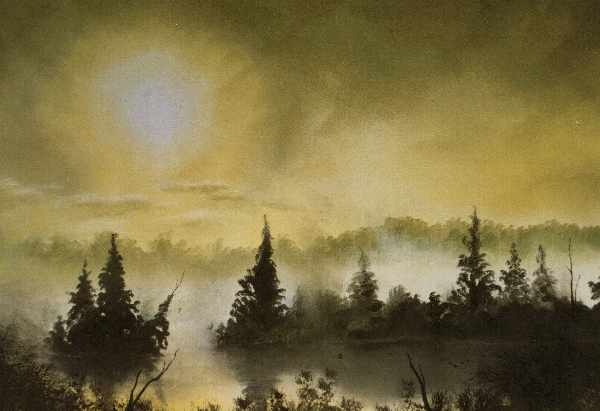
Bill Alexander also introduced me to painting landscapes, and I did several using his tools, supplies, and methods. Golden Dawn, below, is probably the best of them.
The Most Important Lessons
Of all the ways I learned new skills and improved on existing skills, my own desire to paint realistic horses and having to satisfy clients was the most important. Had I not had clients to paint for, I may not have advanced as far as I did.
And had I not had that inner desire, I wouldn’t have had the clients.
Art Education
Is there a takeaway from my experience? Yes.
Formal education can help you improve more quickly.
But the most important tool in your artist’s toolbox isn’t formal education or clients or YouTube videos.
It’s wanting to improve. Everything else follows from that.
There was so much interest in my personal story during December’s Q&A month that I’ve decided to try publishing one personal post every four to six weeks. So if there’s something you would like to know, please send your question via the contact page on this blog. Thank you in advance!
Want to read more posts like this? Sign up for Carrie’s free weekly newsletter and be among the first to know when she publishes new articles.


I really enjoyed hearing about your education in art. Carrie. More please.
During covid I picked up wax crayons and drew a primitive snake: my kind friend said ‘ Keep going as I reckon you have some talent.’ This made me laugh so much that I continued and coloured pencils are my primary medium.
In January I took over the running of an art class which many of the members had attended for 10 years plus , so I’m the art ‘newbie’, and they use watercolour, mixed media, pastels and crocheting and collage.
We all share knowledge with each other and run sessions on stone painting, collages, Art on Black ( paper), how to draw figures in landscapes, plus Peaky Blinder art.
Some formal training would be wonderful though.
Lesley
Lesley,
Formal training can be helpful, but if you go that route, I suggest you try a local community college first. Between the high school, community college, and university art courses, I think the community college class was the most potentially helpful. The class I took included art history and studio work. The instruction was basic, but it was a good buy for the dollar and I didn’t have to go to the expense of living in a dorm!