When students begin a new class or start new lessons, one of the questions they usually ask is about papers for colored pencils. Which brands are best? What are the differences? Which papers do I use most often?
I have answered some of those questions elsewhere on this blog. For example, if you’re interested in knowing a few paper basics, check out Drawing Paper Basics: Surface Texture. I’ll link to other paper articles at the end of this article.
The purpose of this post is to answer four questions that are more specific in nature. If you have a question that is unanswered here, I invite you to ask it. Chances are good that you’re not the only one with the same question.
Frequently Asked Questions about Papers for Colored Pencils
1. Are there any specific brands of paper that work well with colored pencils?
There are some papers branded specifically for colored pencils. Strathmore 400 Series Colored Pencil paper is one. But you don’t have to limit yourself to papers designed for colored pencils.
Instead, look for artist quality, archival papers. These are papers that are manufactured to be as permanent as possible.
Beyond that, there are different types of surfaces from very rough (sanded pastel paper) to very smooth (hot pressed papers and boards).
The smoother the paper, the easier it is to draw a lot of detail. However, you usually can’t put a lot of layers onto the paper.
The rougher the paper, the more layers of color you can add, but it can be very difficult to draw detail until the drawing is nearly finished.
2. Do You Ever Use Colored or Toned Papers?
Yes, I do, but not as often as I used to.
Drawing on colored papers is a great way to reduce drawing time. It’s especially helpful if you need to finish something quickly.
But drawing on colored paper requires some adjustment in method, especially if you’re drawing on darker papers. Colors tend to “fade” into darker paper and the darker the paper, the more difficult it is to get bright, vibrant color.
However, you can get lovely, subtle values by working on darker paper, as you can see in this drawing.
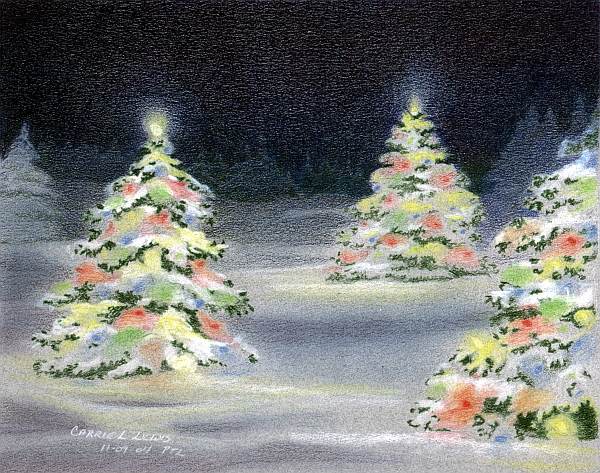
Colored Pencil on Dark Blue or Black Canson Mi-Teintes
3. What Papers Do You Use?
My preferred papers are Stonehenge, Bristol (vellum surface), Strathmore ArtAgain paper for smooth papers. For textured papers, I like Pastelmat and UArt Premium Sanded Pastel Paper.
My two favorite papers are Stonehenge and Pastelmat. I usually use white with both papers, though I’ve had a lot of fun drawing stormy landscapes on Charcoal Pastelmat. That’s a dark gray color and very nice for dramatic lighting. Spring Storm, shown here, is one of those dramatic scenes.
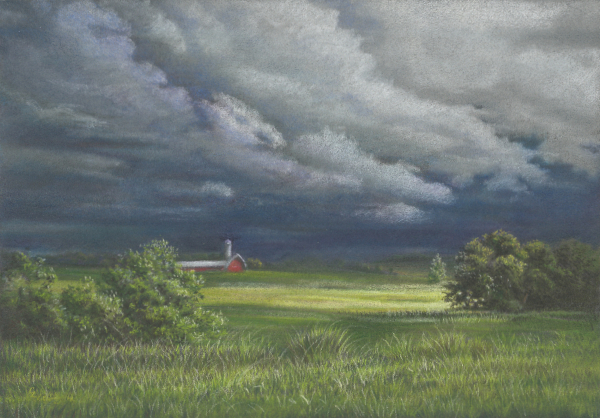
Colored Pencil on Charcoal Pastelmat
Stonehenge comes in light colors (tan, light blue, etc.) and I do sometimes use those for special projects. I’ve also occasionally used black. See it at Dick Blick. But my go-to color is white.
Other Papers I Use
Artagain papers do not come in white, but I still use the lightest colors available. Flannel White (which is the lightest color, but not true white) and Beachsand Ivory. It is available in more colors than Stonehenge, so if I’m looking for something Stonehenge doesn’t offer, my preference is Artagain. It’s also more widely available than Stonehenge. See it at Dick Blick.
I also have a pretty decent stash of Canson Mi-Teintes in a collection of earth tones. It’s made for pastel use so the front of it is quite rough, but the back is smooth and is good for colored pencil. There’s a wider range of colors with this paper, including quite a few light colors. You can see Canson Mi-Tientes at Dick Blick here.
The truth is that although I have most of these papers, I don’t use them very often anymore. I’ve been able to achieve much better results with heavily textured papers like Pastelmat, so that’s my go-to paper at present.
4. Do You Ever Draw On Anything Except Colored Pencil Paper?
I don’t do this very much anymore, but archival mat board used to be my favorite surface. This was back in the early 2000s, and mat board was useful because I did a lot of drawing outside the studio. It was easy to pair with a second sheet of mat board, then secure with binder clips. That created a lightweight working surface that was also quite sturdy.
Sometimes, I clipped a third piece of mat board over the top of the drawing to protect the artwork during transport.
I describe how to make this drawing support in this post.
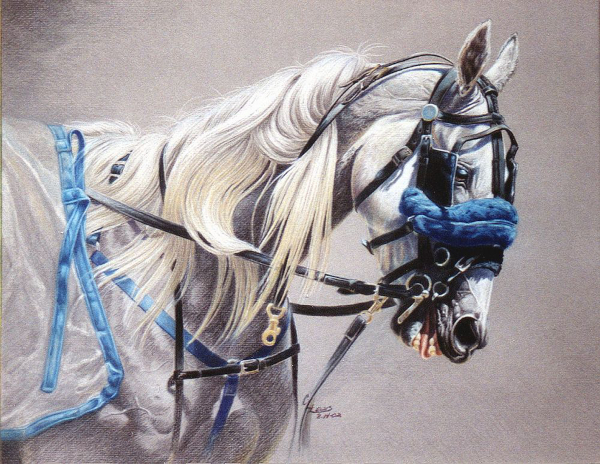
Colored Pencil on Light Gray Mat Board
I’ve even drawn on wood a time or two and found it an excellent support. It’s fun to use, it’s very solid, and if you sand it lightly, the surface is very smooth.
However, you can use it if the texture is a little rougher. This little drawing (about 2 inches tall and 4 inches wide) makes use of the wood grain in the foreground. In fact, all the bare dirt areas are actually bare wood.

Colored Pencil on Wood
If you’re interesting in drawing on something other than paper, give it a try. You won’t know whether it’s suitable for colored pencil—or your drawing style—until you do. Start small and play with color. See what happens. Let us know how it turns out!
Those are My Answers to These Questions about Colored Pencil Papers
I hope you’ve found them helpful.
There are so many papers currently on the market that I could do a full review every week and have enough material for nearly a year. And that doesn’t count the various surfaces or colors of some of the papers!
The best suggestion I can make is to ask an artist who uses any paper you want to try. Ask them what they like about it, if they have any tips for using it, and so on.
Beyond that, buy small batches and try the papers yourself.
Additional Reading
If you’re interested in reading more about drawing papers, check out these articles. They all concern papers for colored pencils in one way or another.
Drawing Paper Basics: Surface Texture
Which Paper is Best for Colored Pencils?
5 Differences Between Sanded Art Paper and Traditional Drawing Paper